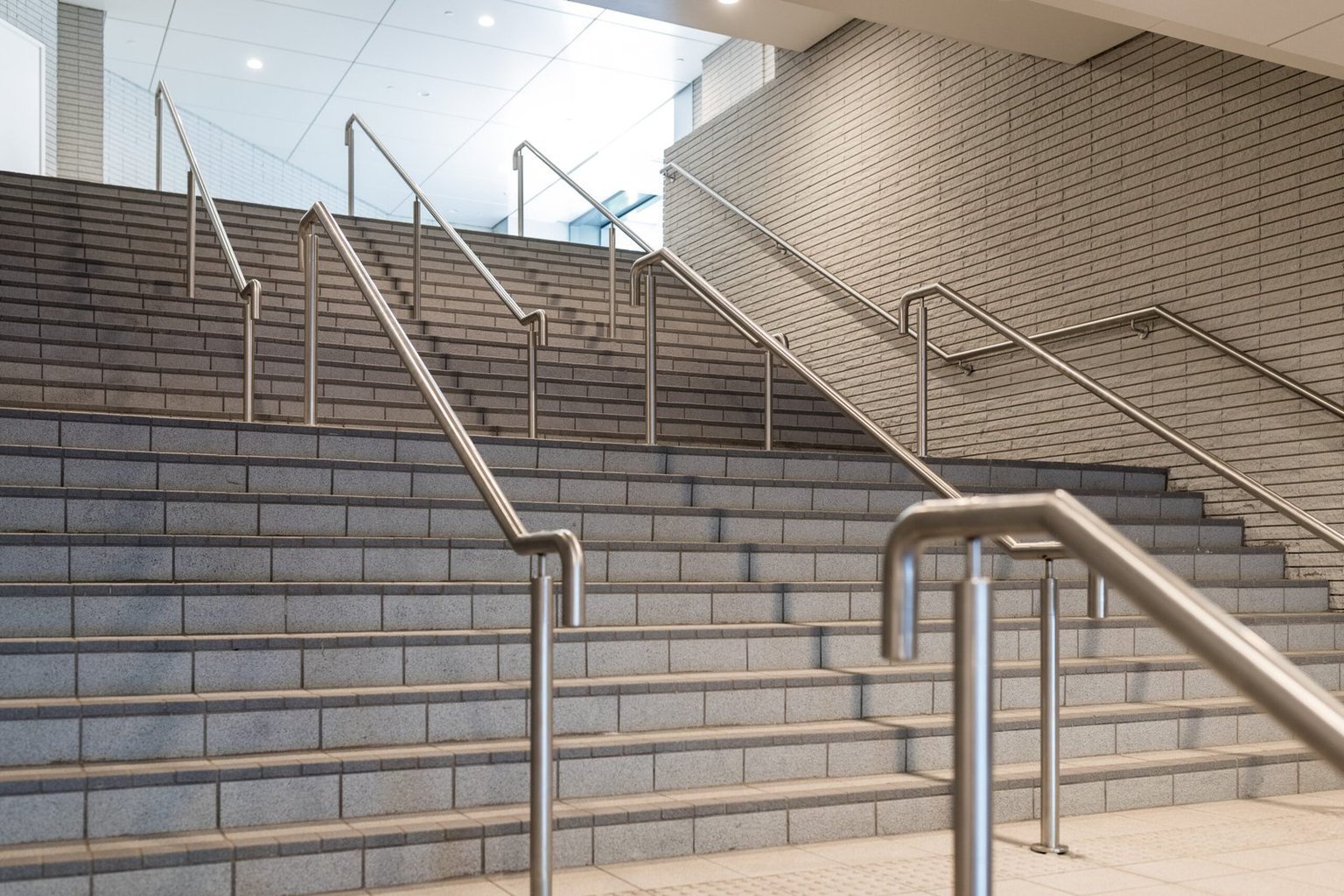
Stainless steel handrails are used not just for safety but also for their interior and exterior aesthetic appeal. Other materials used for handrails such as carbon steel, cast iron or aluminium deteriorate quickly in extreme weather conditions or when exposed to pollution. In these environments stainless steel provides a longer-lasting and better-looking finish, though regular cleaning is required to maintain a sleek, attractive appearance. Therefore stainless steel has pretty much replaced carbon steel and aluminium handrails because of concerns about safety, replacement cost and long-term maintenance cost.
SS and its different types
Stainless steel is available in different gauges such as 16 gauge, 18 gauge, 19 gauge and 20 gauge. The best one to use for handrails is 16 gauge as its finished look & quality is better than others. Stainless steel railing comes in different sizes and shapes, but the most commonly used railings are square-shaped and round-shaped. Diameter of round pipes available in stainless steel railings varies in the range of 3/4 inches to 2 inches. Each style provides a modern twist as they offer their own individual characteristics. Square tubes/pillars are mainly known for contemporary designs and are a little more expensive than the round ones. The round tubes or pillars are considered for a wider selection of applications — it is a more commonly running item and is cheaper than the square-shaped pillars.
These SS railings are tube-shaped stainless steel pipes that are welded together, and then these joints are polished and buffed to give a shiny, sleek look. These SS pipes are mainly welded in two ways, i.e. Argon welding and Arc welding. Argon is a shielding gas and is rapidly gaining fame as it is colourless, odourless, non-flammable and non-toxic. Another main reason welders nowadays prefer Argon welding is because of its finish — Argon welding does not melt the iron or SS pipe much, thus giving a very neat look and also reducing the effort needed for buffing and polishing the metal. On the other hand, arc welding melts the metal for the joint and requires thorough polishing and buffing to make the SS pipe smoother. However, arc welding is more commonly used as it is cheaper than argon welding.
SS pipes are available both imported and made locally. Unfortunately our local market hasn't been able to make quality SS pipes for handrails — local SS pipes get black over time as the chrome on them starts fading away, since they use 300 grade polishes. Imported stainless steel, however, does not fade in chrome, as it is polished in grade 600, which is why everyone recommends and works in imported stainless steel.
Price of local stainless steel railing, normally known as 201-SS, is available in the market for Rs 700 – 750/- RFT (running feet). Whereas the imported stainless steel pipe railing, normally known as 304-SS, is available in the market for 1,250 – 1,300/- RFT (running foot). These pipes are then welded via arc welding or argon welding as discussed above, and then polished. Polishes are also available both locally and imported — these SS pipes are then polished with different chemicals to give a final polished and sleek look.
Handrails can be modified by adding wood or glass with them, giving home owners further options for finishing the look of their staircase or balcony railing.