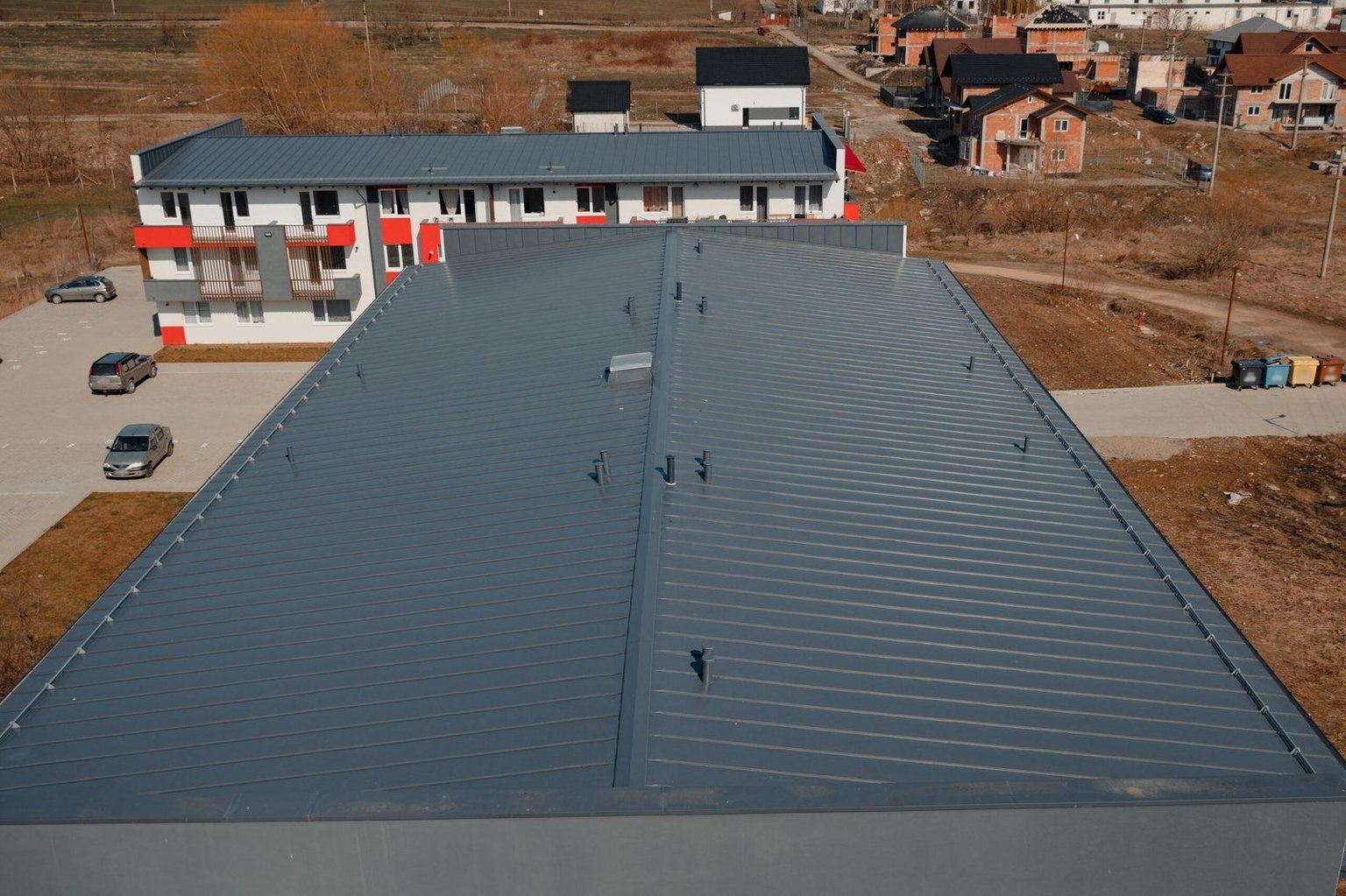
Every house has a rooftop that is exposed to the environment, including heat from the sun and water from rains. With time and global warming in effect, summer temperatures — especially in urban areas — and the intensity of rains are changing. This change in weather and environment also demands various steps and methods to be implemented during construction to minimise the negative effects of external weather. More heat inside the house demands more air conditioning, hence more electricity bills. Similarly, poorly water-proofed roofs can cause water leakages that damage the paint of the house. Hence, during construction of the grey structure of a house, certain measures are taken to protect it from these problems. In this article we will explain standard heat proofing and water proofing techniques for house roofs.
Water Proofing
Water proofing is one of the last steps carried out during grey structure construction of a house, and it is one of the most critical steps — it involves technicalities that must be followed to save the roof completely from leakages. There is a standard procedure adopted in lower and central Punjab that involves the following steps:
- Cleaning and removing debris from the concrete slab roof.
- Cement paste coating (neeru) / bitumen coating.
- Laying a single layer of polythene sheet.
- Mud and husk layer in a slope (6 inches maximum, 3 inches minimum).
- Cement sand 1:8 dry mortar.
- Laying & fixing good quality brick tile (9in x 4.5in x 1.5in).
- Cement coating on brick tiles, filling all grooves and joints completely.
- Protecting all corners by making round edges (gola) with cement sand mortar.
There is a different standard procedure adopted in upper Punjab, KPK & Islamabad regions that involves the following steps:
- Cleaning and removing debris from the concrete slab roof.
- Cement paste coating (neeru) / bitumen coating / chemical coating.
- PCC 1:3:6.
- Laying & fixing good quality marble, or preparing the whole roof in chips terrazzo flooring.
- Protecting all corners by fixing skirtings.
Though this procedure has been adopted and practiced successfully for years, there is still room for improvement in making roofs more secure. Step 3, which involves neeru coating or bitumen, can be replaced with a much more protective and durable chemical coating layer. There are various water proofing chemicals available in the market made specially for protecting roofs, and in our recommendation, Ultra Chemicals' product named "Ultra Seal Roof" is the best among them. It is a protective coating that sets instantly once applied and provides a strong waterproofed surface. Unlike neeru or bitumen, this chemical is not affected by sunlight or other environmental pollutants. It is a water-based chemical that requires no flame or heaters for application, unlike other rolled roofing membranes.
This chemical should be applied to a dry surface that is free of debris, dirt, oil and other greasy components. Weather predictions should be followed constantly before application, as the weather must be completely clear for at least 24 hours at the time of application. The chemical is applied with a roller brush, and the surface area covered per litre depends on the thickness of the coating. Required durability is achieved with a minimum of 2 chemical coats. The chemical should be applied under the supervision of a professional, who must ensure there are no open pores left on the concrete slab and along the parapet joints. It should also be applied vertically up to 1ft on parapet walls.
Heat Proofing
Heat proofing is a procedure carried out during water proofing. As mentioned above, mud is used in the slope layer — the purpose of placing this mud on the roof is in fact to protect against heat travelling to the concrete slab, since mud is a natural insulator and heat doesn't travel through it easily. Though mud is the best natural insulator, there are now various heat proofing products available in the market that people use to protect their houses further from getting heated up in summer. The most commonly and widely used products are:
- Jumbolon boards
- Thermopor sheets
These jumbolon boards/sheets are available in thicknesses of 1.5 inches, 2 inches and 3 inches. Manufacturers make the same sheets in two qualities — superior quality jumbolon boards are made with imported 142D gas, whereas lower quality sheets are made with local LPG. Both qualities have the same compressive strength and density, but the one made with 142D gas has a much longer life than the one made with LPG. Thermopor sheets are not recommended for heat proofing of roofs due to their lower density and compressive strength — they are more widely used in cavity walls.
In case you are willing to use these boards, the steps involved in water and heat proofing will be as follows:
- Cleaning and removing debris from the concrete slab roof.
- Cement paste coating (neeru) / bitumen coating.
- Laying a single layer of polythene sheet.
- Laying jumbolon/thermopor boards.
- Laying a single layer of polythene sheet again.
- Mud and husk layer in a slope (6 inches maximum, 3 inches minimum).
- Cement sand 1:8 dry mortar.
- Laying & fixing good quality brick tile (9in x 4.5in x 1.5in).
- Cement coating on brick tiles, filling all grooves and joints completely.
- Protecting all corners by making round edges (gola) with cement sand mortar.
In case you are constructing your house in a region where mud and brick tiles are not recommended, the steps involved in water and heat proofing will be as follows:
- Cleaning and removing debris from the concrete slab roof.
- Cement paste coating (neeru) / bitumen coating / chemical coating.
- Laying jumbolon/thermopor boards.
- PCC 1:2:4.
- Laying & fixing good quality marble, or preparing the whole roof in chips terrazzo flooring.
- Protecting all corners by fixing skirtings.
Though companies manufacturing heat proofing boards claim the best heat-resisting results, this is still debatable. Heat travels into our houses not only through the roof, but also through sun-facing walls and windows — in fact more heat is transferred through walls and windows. Heat proofing of the roof is only maximally effective if the walls are also heat proofed using cavity methods and the windows are fixed with double-glazed fittings that include heat proofing features.